Four days, two Keralas
Kerala is sold as one place and it is really two.
There is the one up in the hills, cold enough for a jacket, where the tea goes on for as far as you can see and a cloud will walk across the road while you are standing in it. And there is the one at sea level, flat and green and warm, where everything moves by boat and nobody is in a hurry about it.
We did both in four days, which is not enough, and I would do it again the same way.
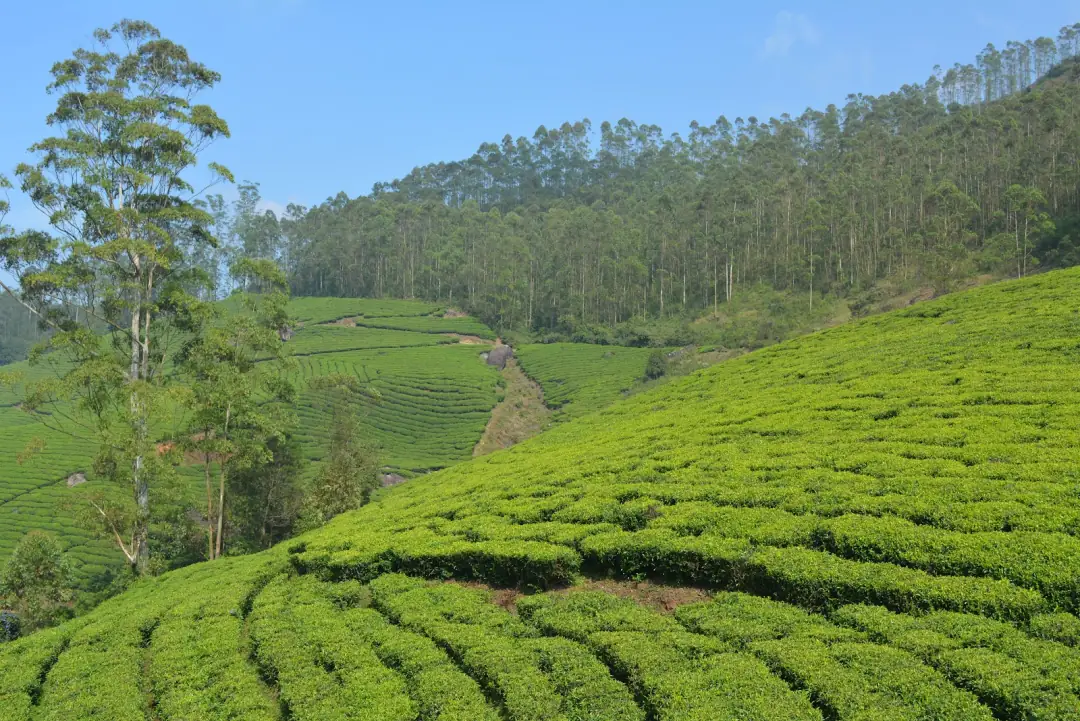 Tea slopes and the road through them
Munnar, where the hills are corduroy
The drive up is the first thing. The road climbs, the air cools, and at some point the forest stops and the tea starts, and then the tea does not stop.
It is planted in rows that follow the shape of the hill, so the whole landscape looks combed. Photos of it always look slightly fake. It looks like that in person too.
 The hills, combed
 Rows going over the top
Up close it is just a lot of small tough bushes, kept at waist height so the leaves can be picked by hand. Somebody walks every one of these rows.
 Tea, up close
 A village sitting in the middle of it
The clouds do not stay in the sky
This was the part I was not ready for.
At that height the clouds are not above you, they are next to you. You watch one come up the valley, and then it arrives, and for about a minute you cannot see the road. Then it moves on and the view comes back like nothing happened.
 A cloud coming up the valley
 And then it is in the trees
 From a viewpoint on the way
There are waterfalls the whole way down, and most of them do not have a name or a car park. They are just there, at the side of the road, and everybody stops anyway.
 Water off the rocks
 The tall one
And then, elephants
We came around a bend and there was a herd out in the open, grazing in the grass below the road like it was the most ordinary thing in the world.
 A herd, from the road
Nobody in the car said anything for a bit. You know, in an abstract way, that wild elephants live here. Seeing them from a road, with no fence worth mentioning between you and them, is a different kind of knowing.
 Closer
That is the thing about the Western Ghats. It is not a park you enter. You are already in it, and the animals were here first.
 Coconuts, by the truckload
Down to the water
Then the road drops, the jacket comes off, and Kerala changes completely.
Alleppey is a town threaded with canals, and the canals are the roads. Boats carry people, boats carry goods, boats carry other boats. Houseboats sit at the edges looking like someone put a small hotel on a barge, which is exactly what they are.
 A houseboat on the water
 Village along the backwater
We took a boat out through the narrower channels, which is where it gets good. The wide water is pretty. The narrow water is where people actually live, and you go past kitchens and washing lines and a man having a smoke on his own steps at a metre and a half's distance.
 Out on the boat
The palms lean out over the channel from both sides until it feels like a tunnel, and the water goes completely still between boats.
 Canal, palms both sides
 A jetty
 A boat with opinions about colour
 The working kind
 Another one going past
 One palm, doing its best
The coast, and the end of it
The last stretch was the sea.
The Kerala coast is not the Goa coast. It is working shoreline for a lot of it, rocks and breakwaters and the remains of an old pier standing out in the water with no explanation offered.
 Rocks and breakwater
 The shore
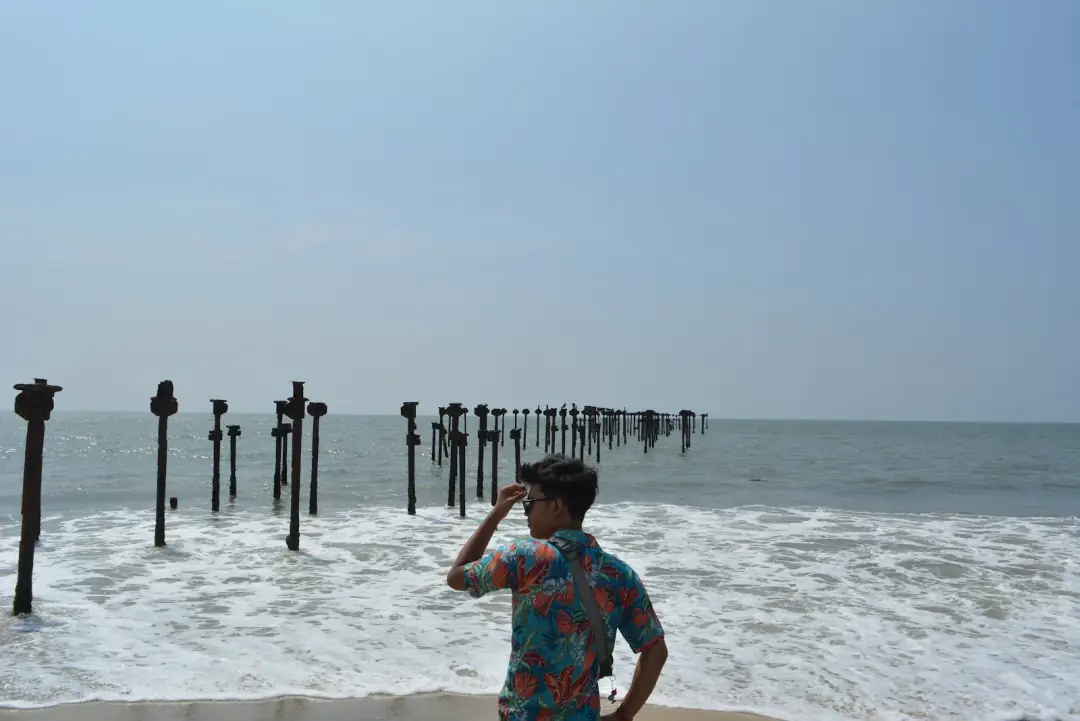 What is left of the pier
 Surf, doing the thing
Then the sun went down behind the palms, and that was the trip.
 Last of the light
Worth knowing
- Four days is enough for hills and backwaters, not for both plus the coast. We tried and the coast got the short end.
- Munnar is genuinely cold at night. I did not pack for cold in Kerala, which in hindsight was silly.
- The narrow backwater channels are better than the wide ones. If you get the choice, take the smaller boat.
- Do not plan the elephants. You either get them or you do not.